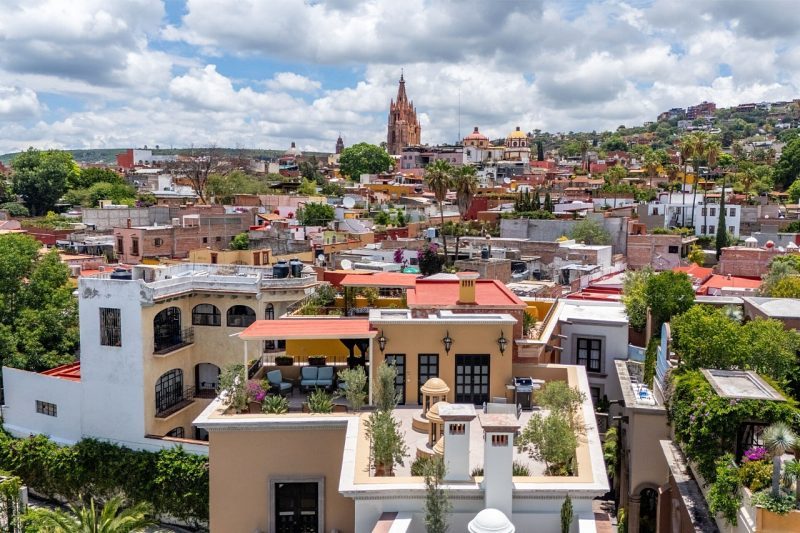
San Miguel de Allende has gone from under-the-radar colonial town to one of the most discussed real estate markets in the Western Hemisphere. That shift didn’t happen in a vacuum. Over the past decade, a combination of favorable exchange rates, a well-established expat infrastructure, and the city’s own particular charm has drawn buyers from the U.S., Canada, and Europe in growing numbers. For anyone browsing houses for sale in san miguel mexico by BHHS Colonial, the appeal is immediately visible in the inventory itself: colonial-era facades, interior courtyards, and rooftop terraces, at prices that still don’t compare to equivalent spaces in Santa Fe or Scottsdale.
The city sits at roughly 6,400 feet in the Bajío highlands of Guanajuato state, which keeps temperatures moderate year-round. This matters more than it sounds. Buyers who initially came for a vacation property often find themselves staying. The lifestyle (walkable to restaurants, galleries, and markets) suits people who want a full life without a car. That combination of climate, culture, and cost has produced a real estate market that keeps moving even when others in Latin America stall.
What the Fideicomiso System Actually Means for Buyers
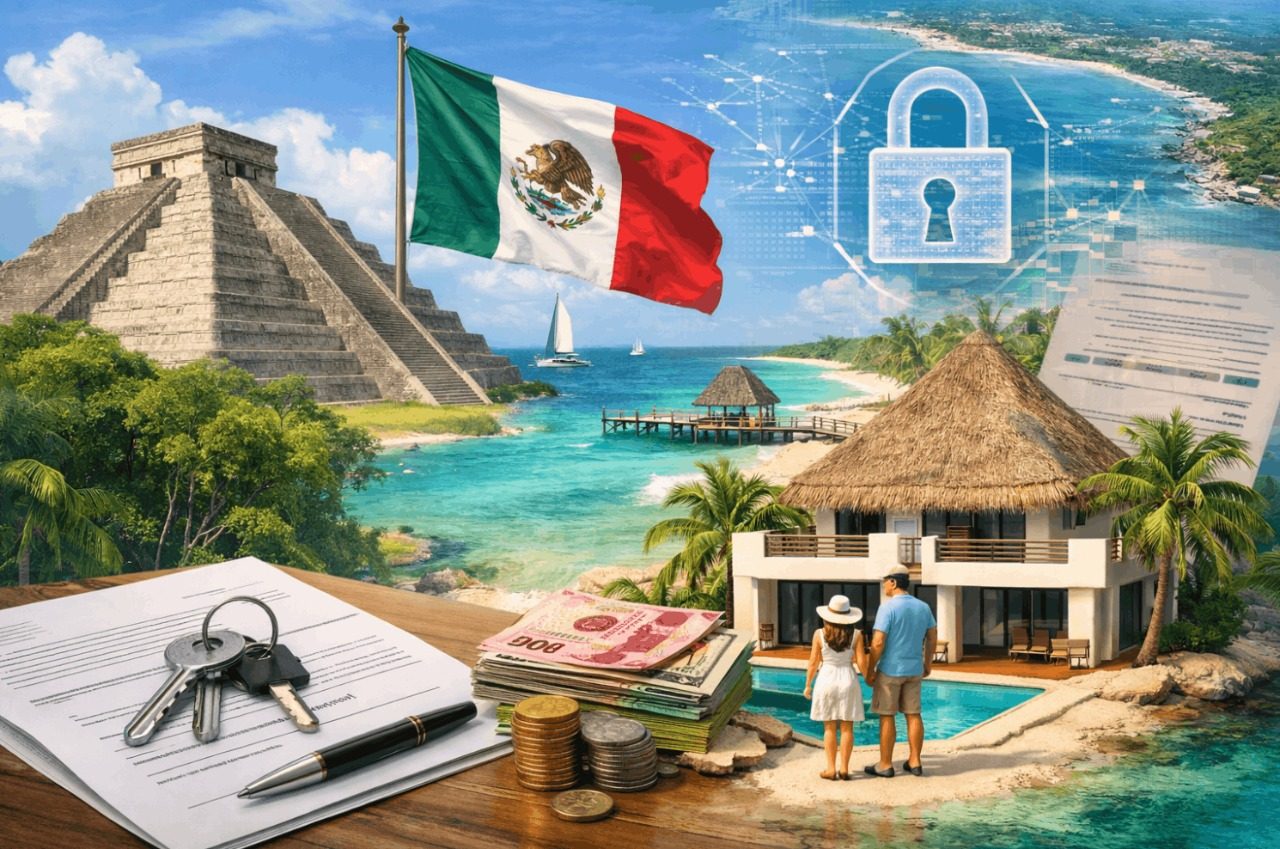
In Mexico, foreigners cannot directly hold title to property in a restricted zone within 50 kilometers of the coast or 100 kilometers of an international border. San Miguel sits well outside those boundaries, so buyers there can hold direct title in their own name under Mexican law, the same way a Mexican national would. This is one practical advantage that surprises people who expect the process to be complicated.
When coastal property is involved, the standard workaround is a fideicomiso: a bank trust that holds title on behalf of the foreign buyer, with renewable 50-year terms. San Miguel buyers sidestep this entirely, which simplifies the ownership structure and reduces ongoing administrative costs. Title insurance is still a good idea, and most experienced buyers use it. The legal pathway for someone purchasing property in San Miguel is genuinely more straightforward than for someone doing the same in Tulum or Cabo.
The purchase process involves a notario público, a Mexican notary with significant legal authority, distinct from a U.S.-style notary, who handles the deed transfer, ensures taxes are paid, and registers the property. Budget roughly 3 to 4 percent of the purchase price for closing costs, which typically include the acquisition tax, notary fees, and registration.
The Numbers Behind the Migration
The U.S. State Department puts the number of Americans living in Mexico at somewhere between 1.5 and 1.6 million, making it the largest community of American citizens outside the United States. San Miguel’s expat population is estimated at around 10,000, concentrated enough to sustain English-language services, medical care, and a social infrastructure that new arrivals can plug into quickly.
Real estate transaction volume in the city has held up even through periods of peso volatility. For buyers earning in dollars or euros, a weaker peso stretches purchasing power directly. A property priced at 6 million pesos shifts considerably in dollar terms depending on the exchange rate at closing, and over the past several years, many buyers have benefited from that dynamic.
The growth hasn’t come only from retirees. Remote work opened up San Miguel to a younger demographic: people in their 30s and 40s who can work from anywhere and found that Mexico’s cost of living let them save more while living better. That audience tends to buy rather than rent, which has supported price stability at the mid-market level.
The Due Diligence Nobody Skips Here
San Miguel has enough transaction history that the professional ecosystem around real estate is reasonably mature. Attorneys who specialize in property transactions, bilingual real estate agents, and multiple title insurance providers all operate in the market. First-time buyers in Mexico should budget time, not just money, for due diligence, since the public registry system works differently than what Americans are used to.
Title searches in Mexico trace through the seller’s ownership history rather than through a standard chain-of-title report. Gaps or irregular transfers can affect future resale. Before closing, your notario will verify that no liens or encumbrances attach to the property, but a separate attorney review adds a layer of protection that most experienced buyers consider worth the cost.
The tax picture for American buyers is worth understanding before closing, not after. The IRS guidance on the tax obligations that come with living abroad covers foreign income reporting requirements, and if you intend to rent the property, foreign rental income must be declared on a U.S. return as well.
What Has Kept Prices Stable

Unlike some Mexican markets, San Miguel doesn’t depend heavily on proximity to the coast or the vacation-rental economy. Its appeal is primarily residential and lifestyle-driven, which creates different buyer motivations than a market like Cancún or Playa del Carmen. People buy here because they want to live here or plan to eventually, not primarily to flip or rent short-term.
Supply constraints help too. The city’s historic center carries UNESCO World Heritage designation, which limits demolition and new construction within its core. The colonial streetscape is protected, and new development tends to happen on the edges rather than at the center. This keeps inventory tight in the areas most buyers want, acting as a ceiling on how much supply can expand in response to demand.
The Consumer Financial Protection Bureau’s homebuying guidance applies even for overseas purchases in the sense that financial preparation, including currency conversion planning and understanding full carrying costs, is as relevant in San Miguel as anywhere else. Buyers who have done that work beforehand find the transaction itself smoother.
What Buyers Get Wrong Before They Arrive
The most common misstep isn’t legal; it’s geographic. San Miguel sits at high altitude, and the temperature swings between a hot midday sun and genuinely cold nights in winter. People who research the climate from sea-level assumptions tend to underpack for evening and overestimate how much outdoor time they’ll get in January. The rainy season runs roughly June through September, which changes the character of the city more than most travel photos suggest.
The second is neighborhood selection. The historic centro gets most of the attention, and prices there reflect it. Neighborhoods like Guadalupe, San Antonio, and Ojo de Agua offer substantially different character and price points. Buyers who limit their search to the centro often miss properties that would suit them better at a lower cost.
Third, the local property market rewards patience in a way that can frustrate buyers used to competitive bidding. Listings often sit longer than in major U.S. cities. Motivated sellers sometimes negotiate further than their asking price implies. An agent with actual transaction history in San Miguel, not just familiarity with the city, can read those signals accurately.