
Web development careers don’t stay neatly inside the browser anymore. As IoT devices, smart wearables, and connected hardware become mainstream, developers are increasingly working on products where their code ends up embedded in a physical object that someone holds in their hand, bolts to a machine, or ships across a supply chain.
That shift comes with a learning curve most programming curricula don’t cover: how the physical shell around your software actually gets made. If you’re on a cross-functional team building a connected product or eyeing a role that puts you closer to hardware, here’s what you need to understand about manufacturing choices.
Why Manufacturing Decisions Affect Your Code
At first glance, what a product is made of seems like an industrial engineering problem, not a developer problem. That changes fast when you realize:
Thermal constraints affect what hardware you can spec and how aggressively your firmware runs the processor.
Material properties determine whether your device can be sealed against moisture (relevant to connectivity hardware or outdoor sensors).
Production volume determines whether a custom PCB enclosure makes economic sense, which affects whether your software can assume standardized hardware or has to adapt to prototype variability.
Understanding the manufacturing layer early means your technical decisions connectivity choices, duty cycles, power management logic are grounded in what the physical product can actually do.
Plastic or Metal? The First Decision Downstream of Your Hardware Spec
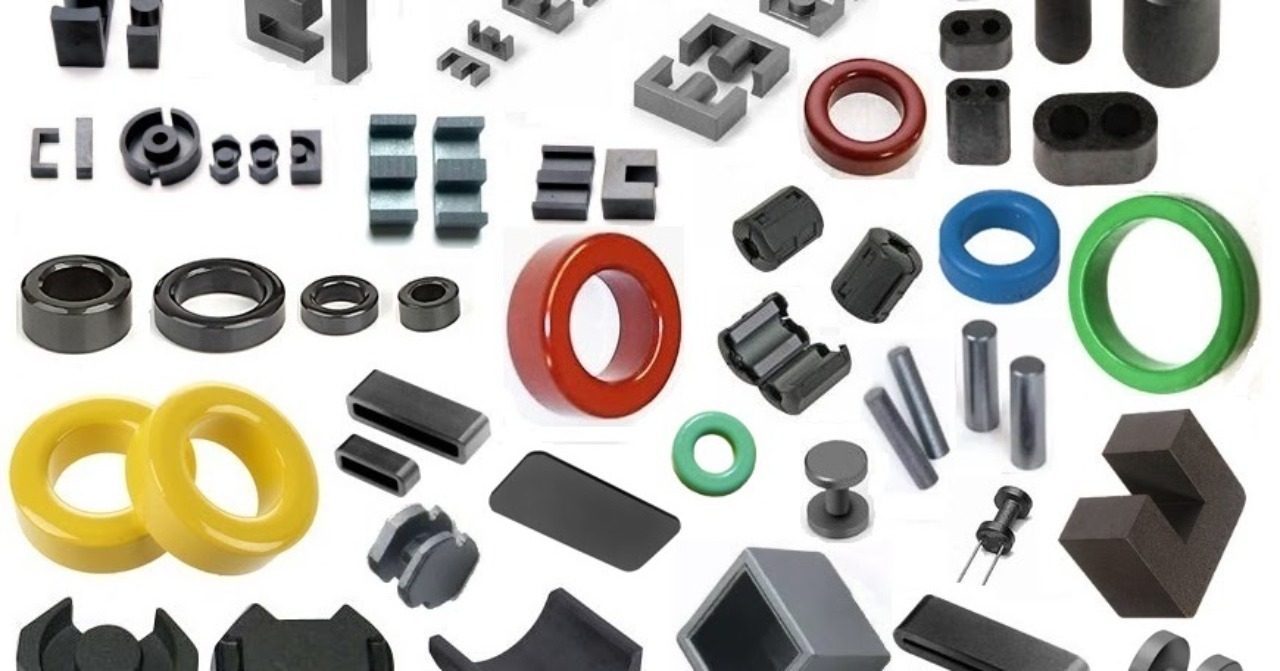
Most connected devices have two categories of structural components: polymer parts (plastics, composites) and metal parts (cast or machined). Each has distinct trade-offs that ripple upward into the product you’re building.
Polymers: Flexible, Light, and Increasingly Capable
Plastics get undersold. Modern manufacturers that specialize in industrial polymer solutions work with engineered materials that go far beyond commodity consumer plastics. Glass-fiber-reinforced nylons, high-performance PEEK, and specialty composites can achieve strength-to-weight ratios that compete with light metals, which is relevant when you’re designing a wearable or handheld device where bulk and weight directly affect the user experience your code is trying to create.
For developers, the polymer choice affects:
EMI/RF shielding options if your device uses Bluetooth, Wi-Fi, or cellular, the housing material must be compatible with antenna placement and RF performance. Certain polymers can be formulated with conductive fills for shielding; others need metal inserts.
Thermal management high-power processing generates heat; polymer housings that trap heat require your firmware to be more conservative with thermal throttling logic.
IP rating achievability sealed polymer enclosures can reach IP67 or IP68 ratings more readily than complex metal assemblies, which affects how you design connectivity retry logic for outdoor deployments.
Metal Components: Where Structural Loads and Heat Demand It
Metal enters the picture when a component must bear load, conduct heat efficiently, or provide consistent electromagnetic shielding. Precision die casting is the dominant production method for complex metal components at scale: molten aluminum, zinc, or magnesium alloy is forced into a precision tool under high pressure, producing parts with tight tolerances and excellent surface consistency.
Developers encounter die-cast components most often as:
Heat sinks and thermal spreaders: critical when your firmware needs to sustain high-performance compute without throttling.
RF shielding cans: metal enclosures inside the device that isolate sensitive radio circuitry.
Structural frames: the skeleton inside larger connected devices like industrial gateways or edge compute nodes.
The engineering tradeoff matters to developers because die-cast tooling is expensive to modify. If your hardware spec evolves late in development (bigger battery, added module, different connector placement), a die that’s already been cut may force constraints your firmware has to work around rather than the hardware being revised.
What This Means for Your Development Workflow
If you’re joining a hardware product team or leading development on a connected device, a few habits will keep you from getting blindsided by manufacturing decisions:
Get in the design review room early
Manufacturing partners are easier to work with before tooling is committed. Early conversations about antenna placement, thermal budget, and connector accessibility can save significant firmware workarounds later.
Treat hardware specs like infrastructure specs
The same discipline you’d apply to documenting an API or a cloud infrastructure configuration applies to hardware: what material, what tolerances, what certifications, what constraints. If you don’t document it, the next developer inherits mystery constraints with no context.
Understand the prototype-to-production gap
Prototypes are often machined, 3D printed, or assembled by hand. Production uses injection molding, die casting, and automated assembly. The device you develop on may behave differently than the first production unit thermal behavior, RF performance, and vibration response can all shift between stages.
Build for hardware variability
Even in mass production, component tolerances vary. Sensors drift. Connectors have mechanical wear. Firmware that assumes a perfectly nominal hardware environment will fail at scale in ways that are hard to reproduce in the lab.
Career Angle: Hardware-Adjacent Roles Are Growing

If you’re looking to expand your career scope, roles at the intersection of web development and physical product firmware engineering, embedded systems, IoT platform development, and device management software are growing and pay well. Companies building connected hardware desperately need developers who can communicate across the software-hardware boundary.
That fluency starts with understanding what’s behind your device’s casing. Knowing that the shell might be a precision polymer composite or an aluminum die casting, and knowing how each choice constrains what you’re building, makes you a fundamentally more effective engineer on a cross-functional product team.